

Industry
International Development
Challenge
Pacific Island countries need consistent and repeatable vegetation data across large and remote regions, but traditional approaches such as LiDAR and field campaigns are difficult to scale and maintain over time.
Results
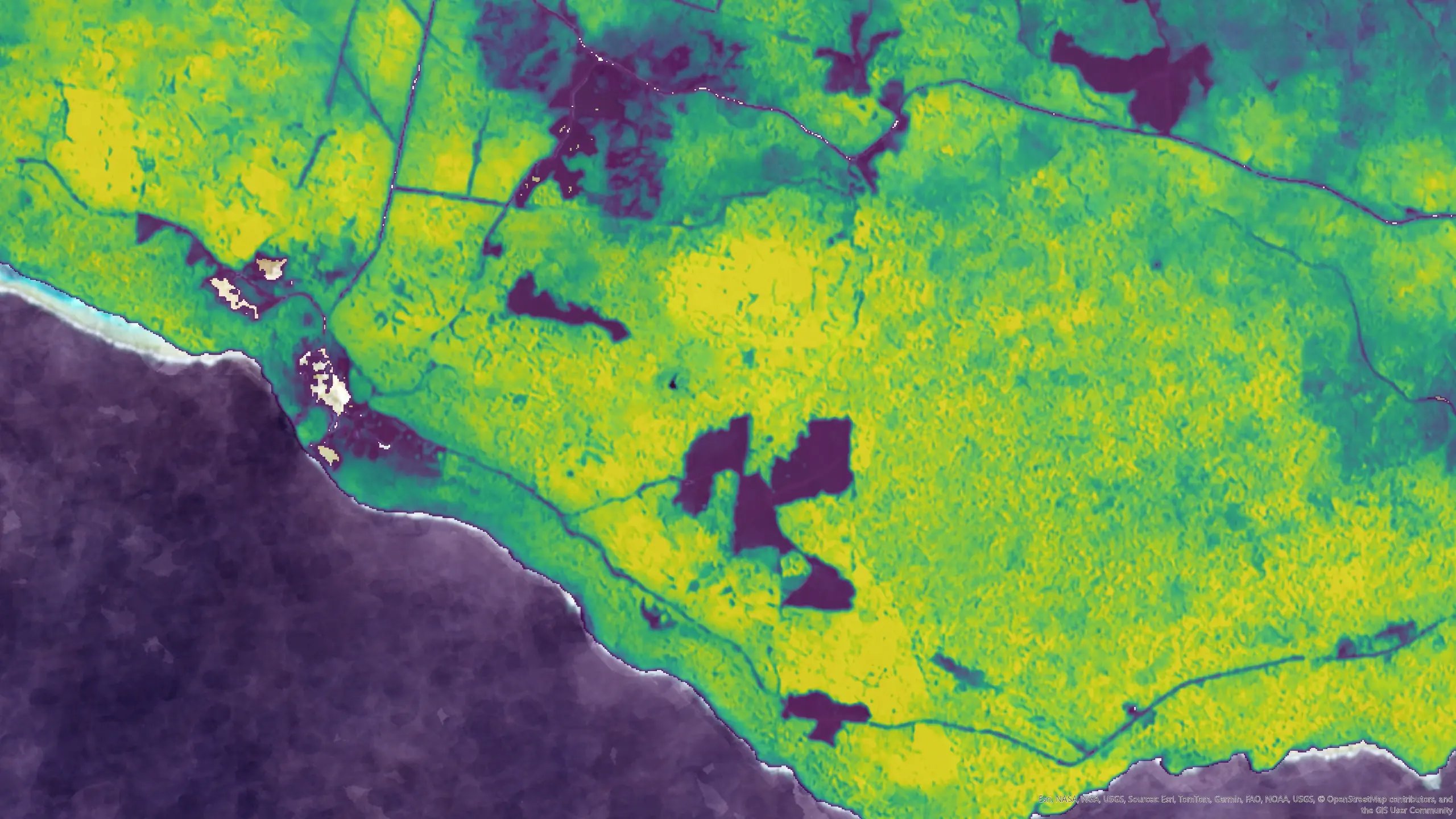
Geoneon developed a quarterly vegetation height dataset at 10 m resolution using Sentinel-2 imagery, covering multiple Pacific Island countries from 2020 to 2025. The dataset enables vegetation structure mapping and ongoing monitoring of clearing, degradation, and regrowth across the region.
Key Product
Geoneon Vegetation
About
This work was delivered in collaboration with the Pacific Community (SPC) DGE team and the D4DInsights team, including Aditya Agrawal, Brian Killough, Alex Leith, and Jesse Anderson.
The collaboration focused on improving the availability of scalable vegetation monitoring data across Pacific Island countries to support environmental management, restoration, and climate-related reporting workflows.
The Challenge
Monitoring vegetation across the Pacific presents several practical challenges.
Pacific Island countries are geographically dispersed and often characterised by rugged terrain, persistent cloud cover, and limited access for field-based surveys. At the same time, governments and organisations require more consistent vegetation information to support monitoring, restoration, carbon reporting, and land-use planning.
Traditional approaches each have limitations.
-
NDVI-based methods can indicate vegetation greenness, but they do not measure vegetation structure or height.
-
LiDAR and field campaigns can produce highly accurate results, but they are expensive, spatially limited, and difficult to repeat consistently across large regions.
The challenge was to develop a vegetation monitoring approach that could provide:
• consistent regional coverage
• regular updates over time
• scalable monitoring across multiple countries
• reliable outputs despite persistent cloud cover
The Solution
Geoneon developed a vegetation height product using Sentinel-2 imagery at 10 metre spatial resolution.
The work produced a multi-year, quarterly dataset covering 2020–2025 across multiple Pacific Island countries.
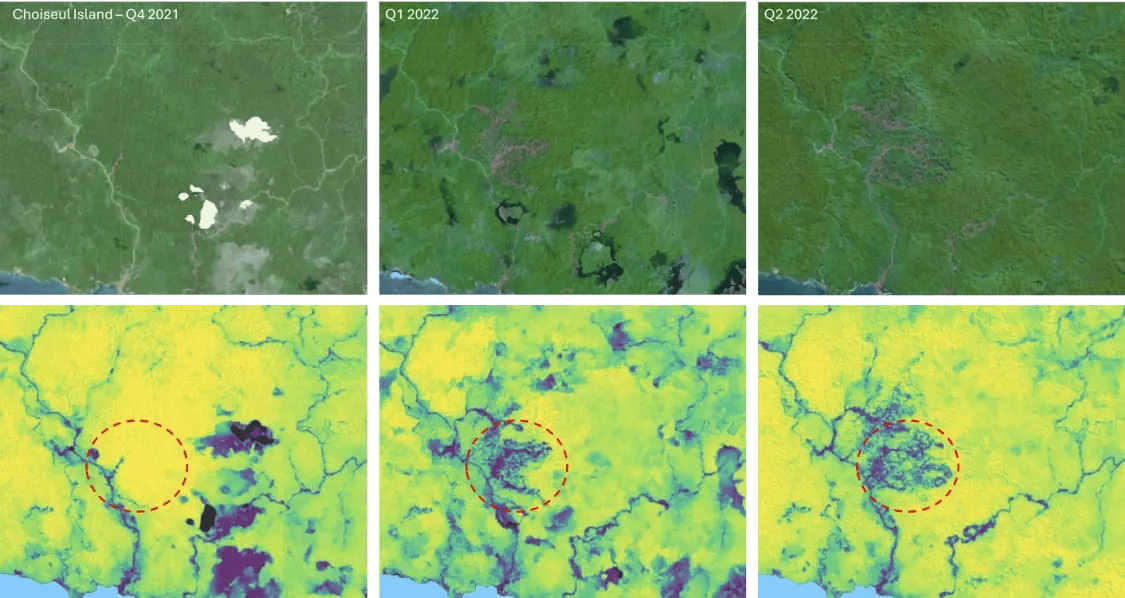
Rather than providing a single snapshot in time, the dataset was designed to support ongoing vegetation monitoring through repeated observations over time.
The outputs enable:
• vegetation structure mapping
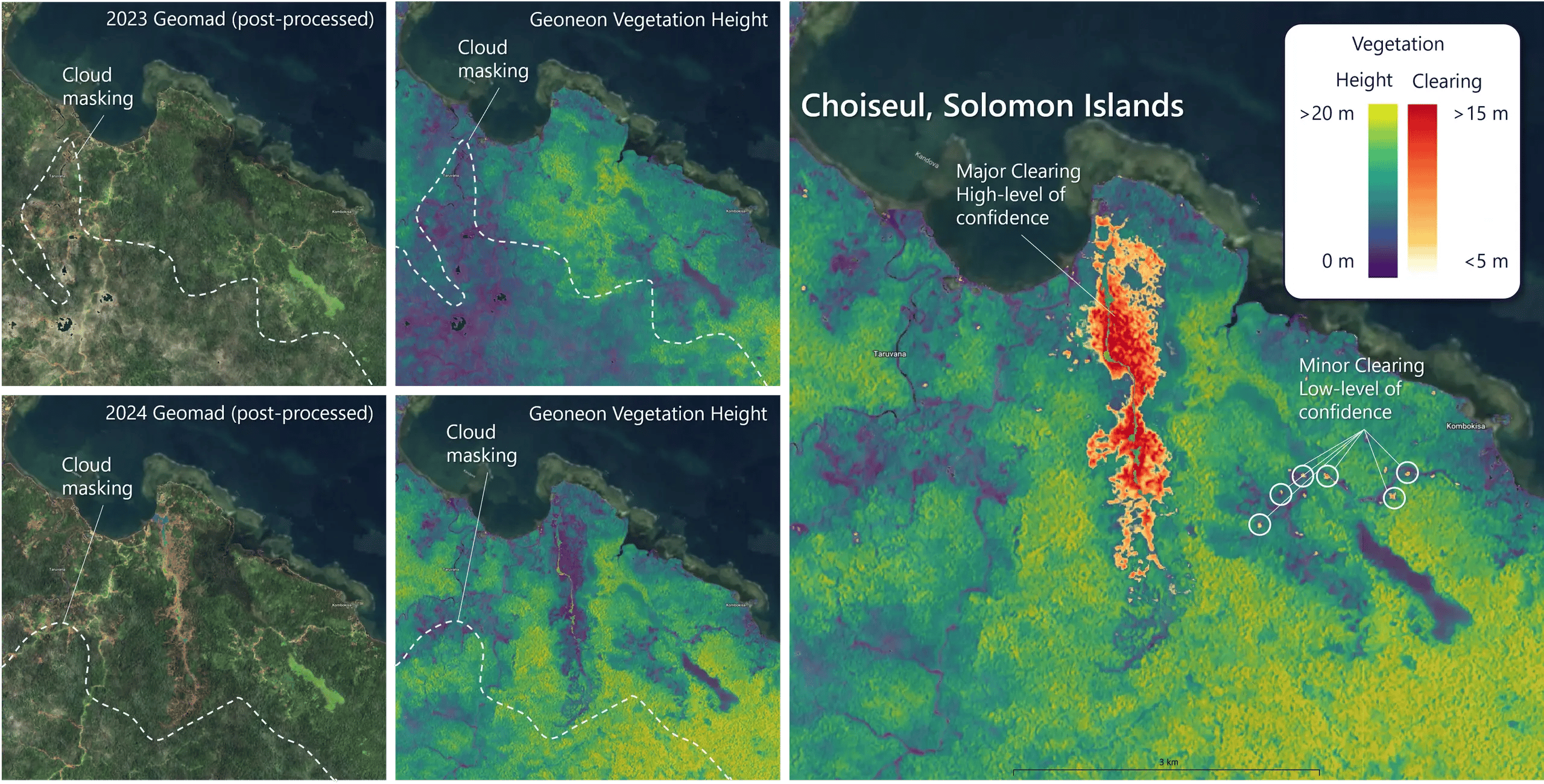
• clearing and deforestation detection
• regrowth and restoration monitoring
By using Sentinel-2 imagery, the approach provides a scalable alternative to LiDAR and field-based campaigns while supporting consistent regional monitoring across large and remote areas.
The Results
The project delivered a repeatable vegetation monitoring dataset across multiple Pacific Island countries.
Key outcomes included:
• quarterly vegetation height mapping from 2020–2025
• 10 metre spatial resolution across large regional areas
• consistent vegetation structure data across multiple countries
• the ability to monitor vegetation change over time rather than relying on isolated snapshots
These outputs support:
• biomass and carbon-related workflows
• restoration and land-use planning
• regional environmental monitoring
• ongoing tracking of clearing, degradation, and regrowth
By creating a scalable and repeatable vegetation monitoring dataset, the project provides a clearer basis for understanding how vegetation structure changes across the Pacific over time.
Have a project or question in mind?