
Industry
International Development
Challenge
Bhutan needed a clear way to see where wildfire risk overlaps with communities and buildings, so authorities could prioritise preparedness and mitigation.
Results
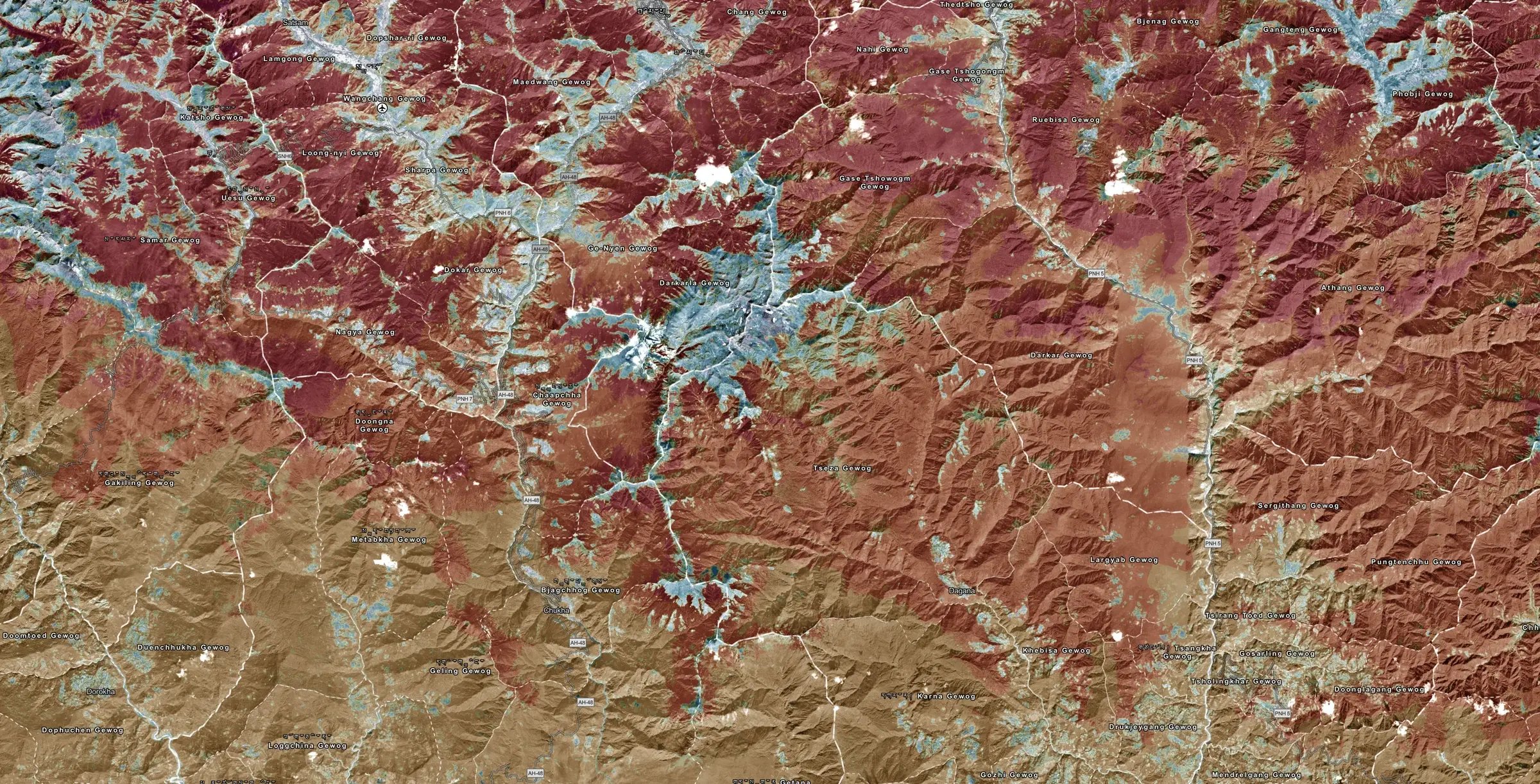
Geoneon developed the Bhutan Forest Fire Exposure Index, assessing more than 400,000 buildings and identifying 24,221 — 5.9% of buildings assessed — classified from Relatively High to Extremely High forest fire exposure.
Key Product
Geoneon Wildfire
About
Bhutan’s Department of Local Governance and Disaster Management (DLGDM) and Department of Forest and Park Services (DoFPS) help protect the country’s communities, ecosystems, and infrastructure from natural hazards, including forest fires. Their work is critical in a country where mountainous terrain and extensive forest cover shape both environmental value and disaster risk.
The project was delivered through the iCARE programme with support from the World Bank and the Asian Disaster Preparedness Center (ADPC), in collaboration with Bhutan’s Department of Local Governance and Disaster Management and Department of Forest and Park Services.
The Challenge
Forest fires occur regularly in Bhutan, particularly during the dry winter and spring seasons. Fires can spread quickly through steep terrain and dense vegetation, sometimes reaching settlements and infrastructure.
But wildfire risk is not just about where fires occur. For government agencies responsible for disaster preparedness, the critical question is what (and whom) those fires threaten.
Authorities needed to understand:
- Which communities and buildings are most exposed to wildfire
- Where prevention and mitigation efforts should be prioritised
- How wildfire risk varies across the country
Large volumes of environmental and satellite data existed, but turning that information into clear, operational insights remained difficult. Without this visibility, it was challenging to prioritise mitigation efforts or allocate resources effectively.
The Solution
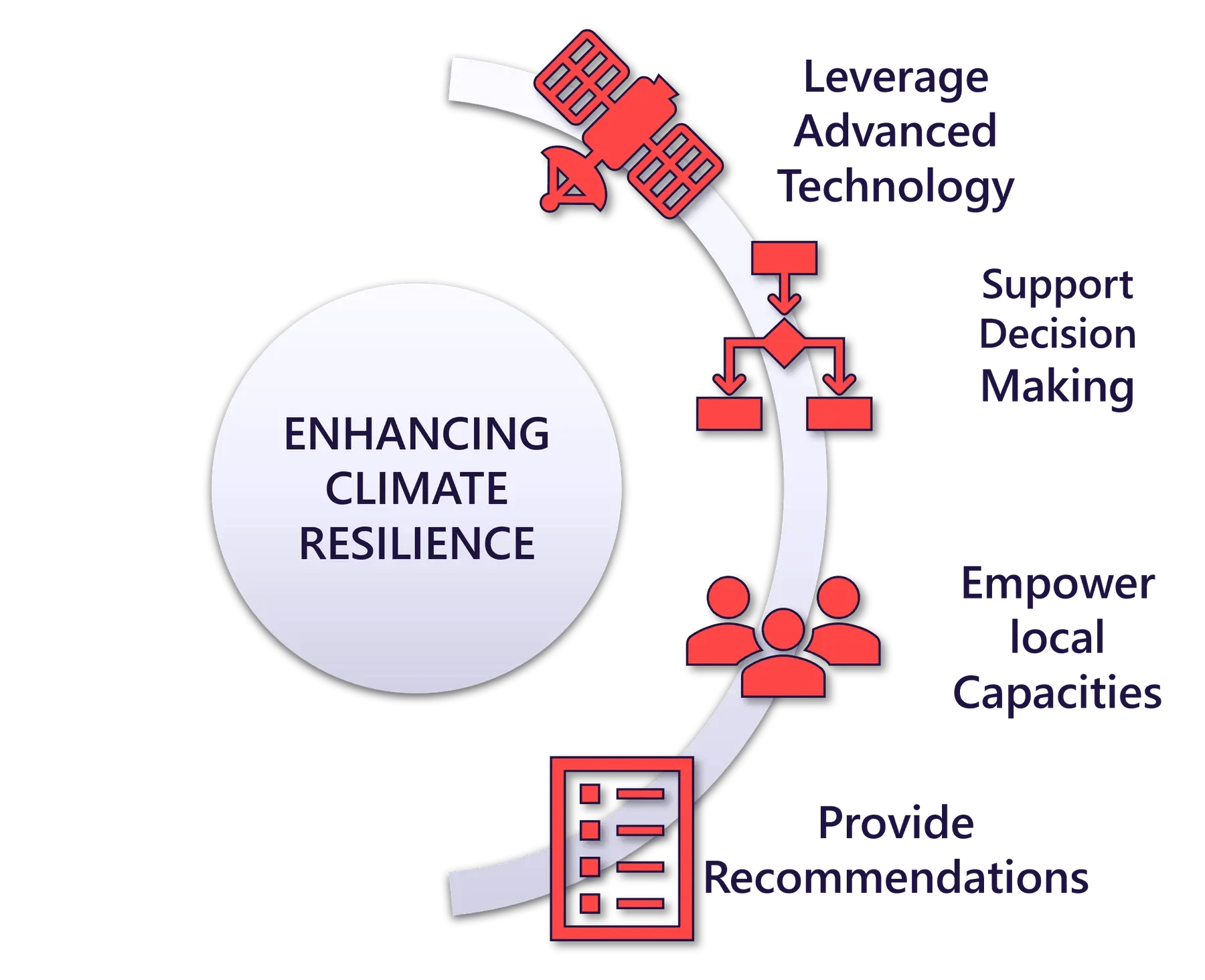
Geoneon partnered with Bhutanese agencies and international organisations to develop the Bhutan Forest Fire Exposure Index, a national geospatial platform designed to translate complex climate and environmental data into actionable risk insights.
The system integrates:
- Earth observation imagery
- vegetation and terrain modelling
- wildfire severity analysis
- national building footprint datasets
Together, these inputs generate two critical layers of analysis:
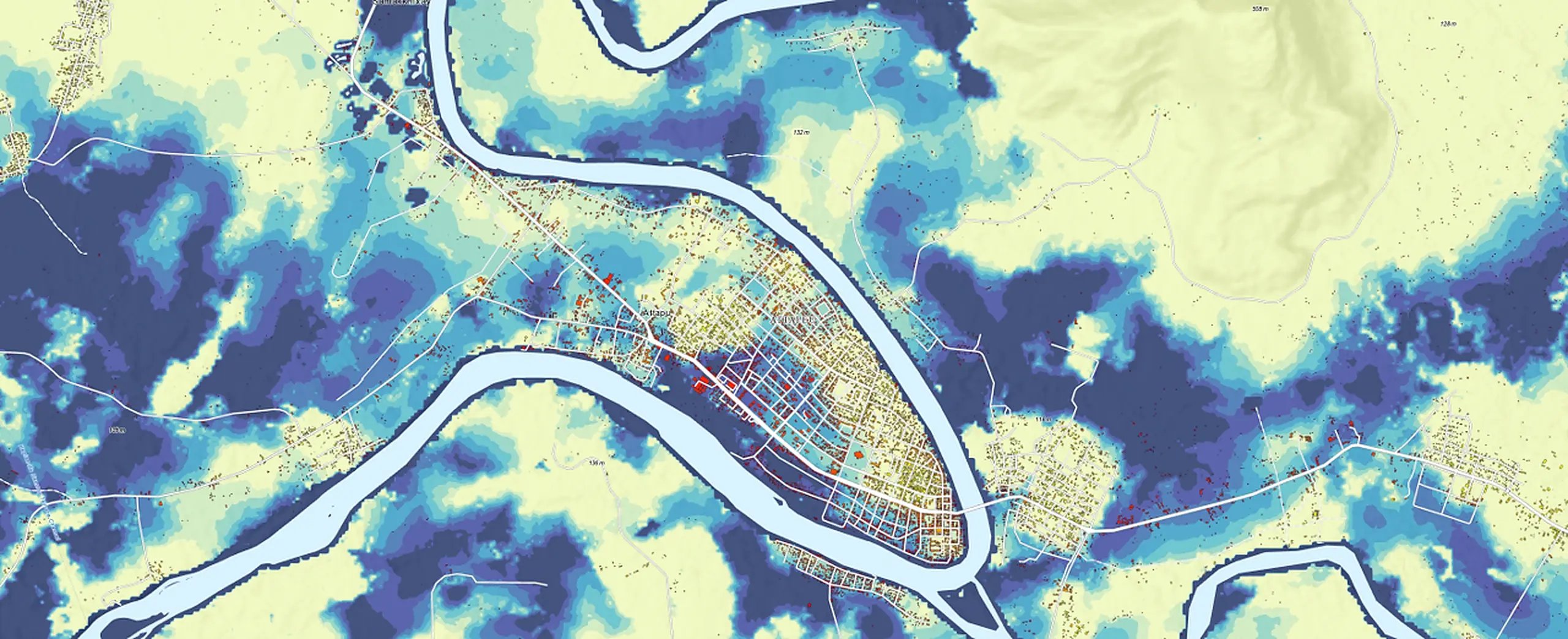
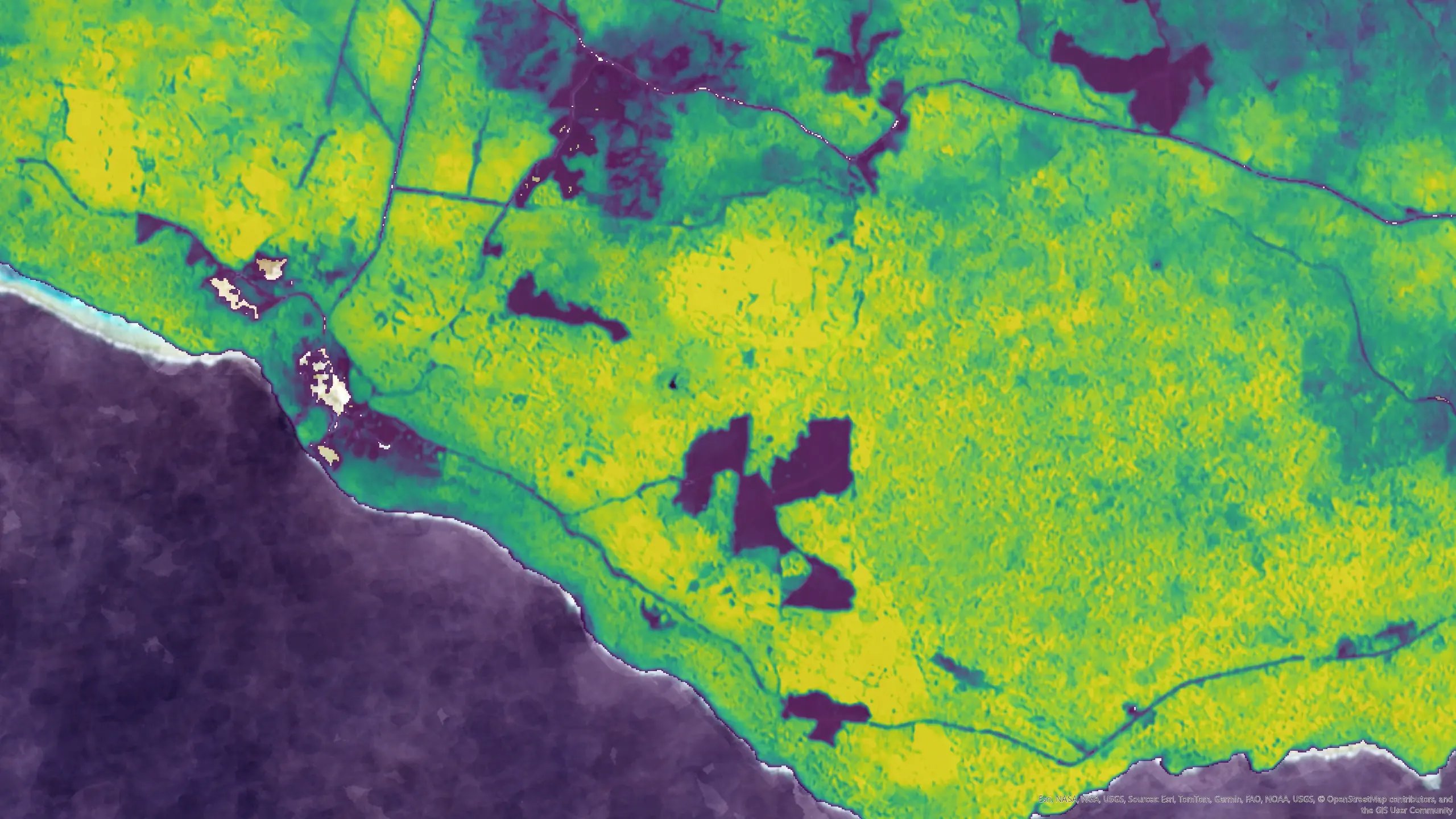
- Wildfire Severity: Mapping where potential fire severity is higher based on vegetation, climate and topography.
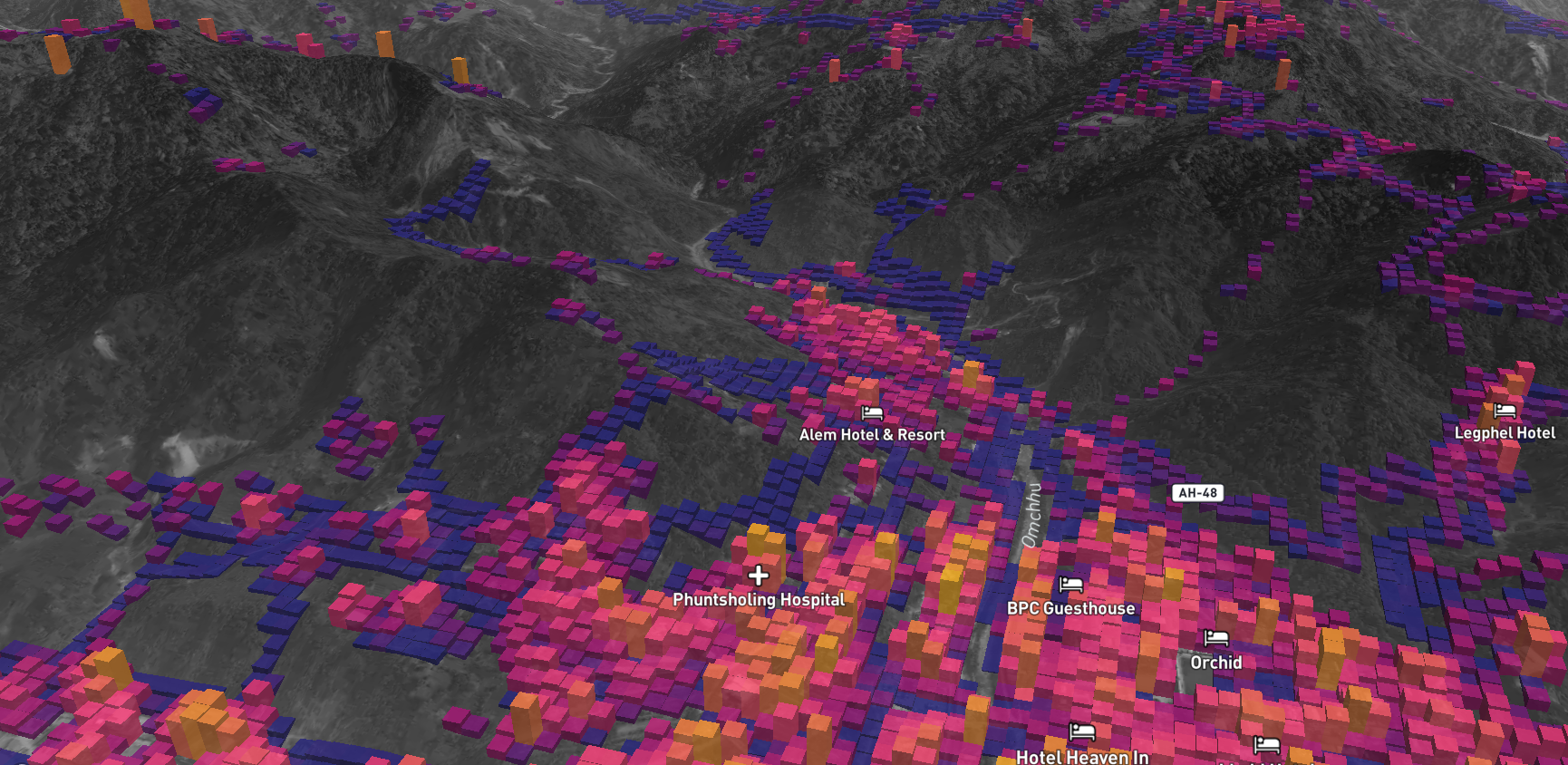
- Building Exposure: Identifying which structures have higher exposure based on their proximity to forests and surrounding vegetation.
By combining hazard modelling with building exposure analysis, the index reveals where wildfire risk intersects with communities and infrastructure.
Geoneon also worked closely with Bhutan’s agencies to support adoption of the platform through training and knowledge transfer, enabling local teams to incorporate the index into disaster preparedness planning.
The Results
The Forest Fire Exposure Index delivered a nationwide assessment of wildfire exposure to buildings in Bhutan.
Key findings included:
- 400,000+ buildings analysed nationwide
- 24,221 buildings — 5.9% of buildings assessed — classified from Relatively High to Extremely High forest fire exposure.
- Exposure insights across all districts (Dzongkhags) and local administrative areas (Gewogs)
-
The project also supported local adoption through capacity building, including 8 knowledge products, 2 training sessions, and training for more than 20 government officials.
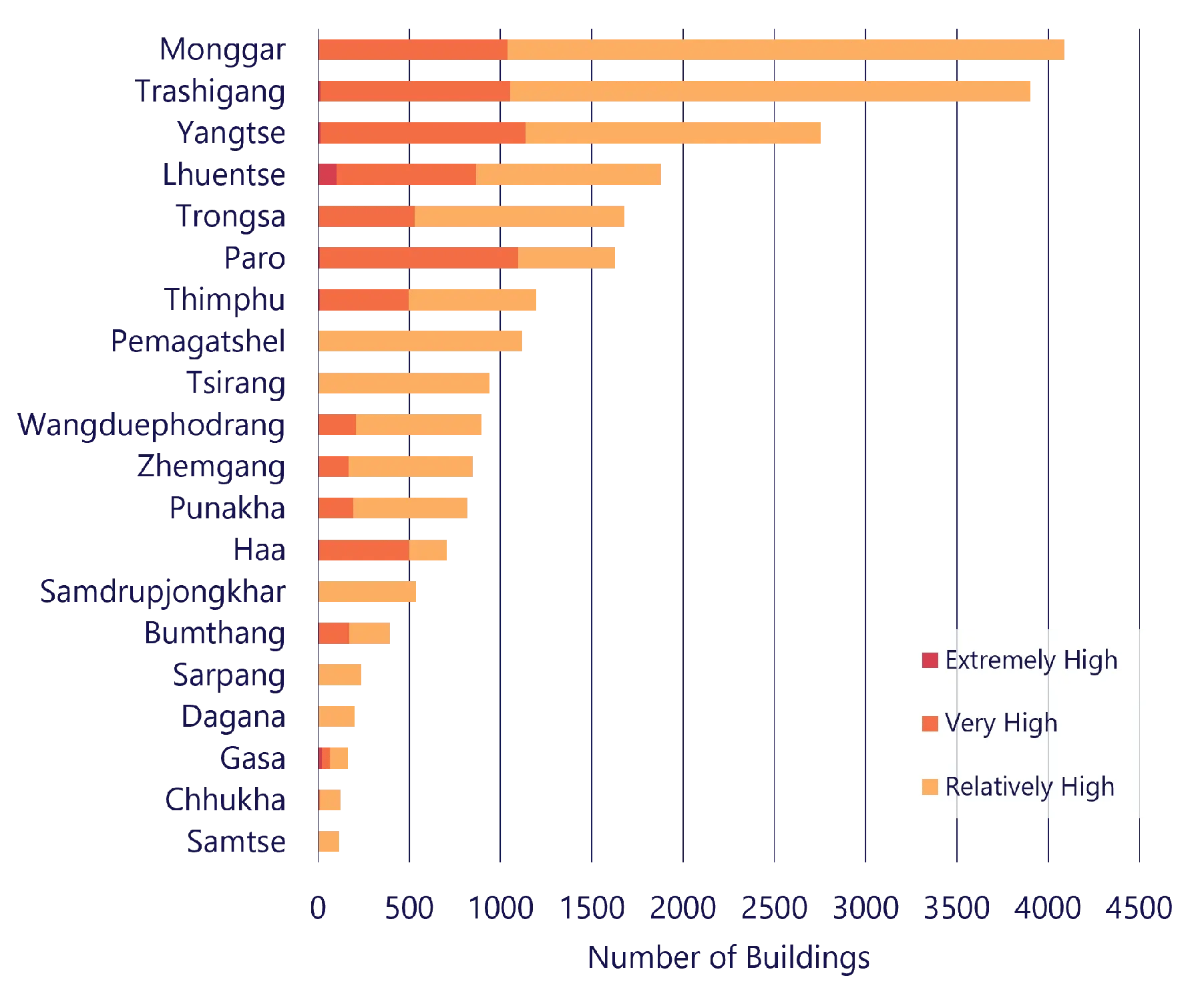 These insights now help authorities:
- prioritise wildfire mitigation efforts in higher-exposure areas
- allocate firefighting and preparedness resources more effectively
- support long-term disaster risk planning
- increase awareness among communities about wildfire exposure
Instead of relying on general wildfire risk maps, Bhutan’s agencies can now focus prevention and preparedness efforts where they will have the greatest impact.
The platform also supported engagement with 30+ stakeholders and received more than 20,500 visitors.
Have a project or question in mind?