
Industry
Local Government
Challenge
The City of Launceston needed a clearer way to respond to rising heatwave risk and the urban heat island effect, especially where lower canopy cover overlapped with more vulnerable populations.
Results
Geoneon established a 2021 canopy baseline of 19.5% across an 85.2 km² urban and peri-urban project area, analysed land surface temperature and population vulnerability, and identified priority areas for urban greening. The evidence helped lay the foundation for the City’s Urban Greening Strategy.
Key Product
Geoneon Heat, Geoneon Vegetation
About
The City of Launceston commissioned Geoneon and the University of Tasmania to help lay the foundation for its first Urban Greening Strategy.
Geoneon provided spatial analysis of tree canopy, urban heat and vulnerability, while the University of Tasmania contributed research and community engagement. Together, the work provided an evidence base to support a more climate-resilient approach to Launceston’s urban forest.
The Challenge
As heatwaves increase in severity across Australia, councils are under growing pressure to make cities cooler, healthier, and more resilient. In Launceston, that meant responding not only to the urban heat island effect, but also to the uneven way heat affects different parts of the community.
To do that well, the City of Launceston needed an approach that combined local government priorities, research expertise from the University of Tasmania, geospatial analysis from Geoneon, and input from local communities.
The city needed to answer a set of practical questions:
- What is the current baseline for urban canopy cover?
- Where is canopy lowest across the city?
- How does canopy relate to land surface temperature and population vulnerability?
- Where should urban greening efforts be prioritised?
This required more than a tree inventory. The challenge was to combine spatial analysis, heat and canopy data, and community input into an evidence base that could guide the City’s Urban Greening Strategy and long-term action.
The Solution
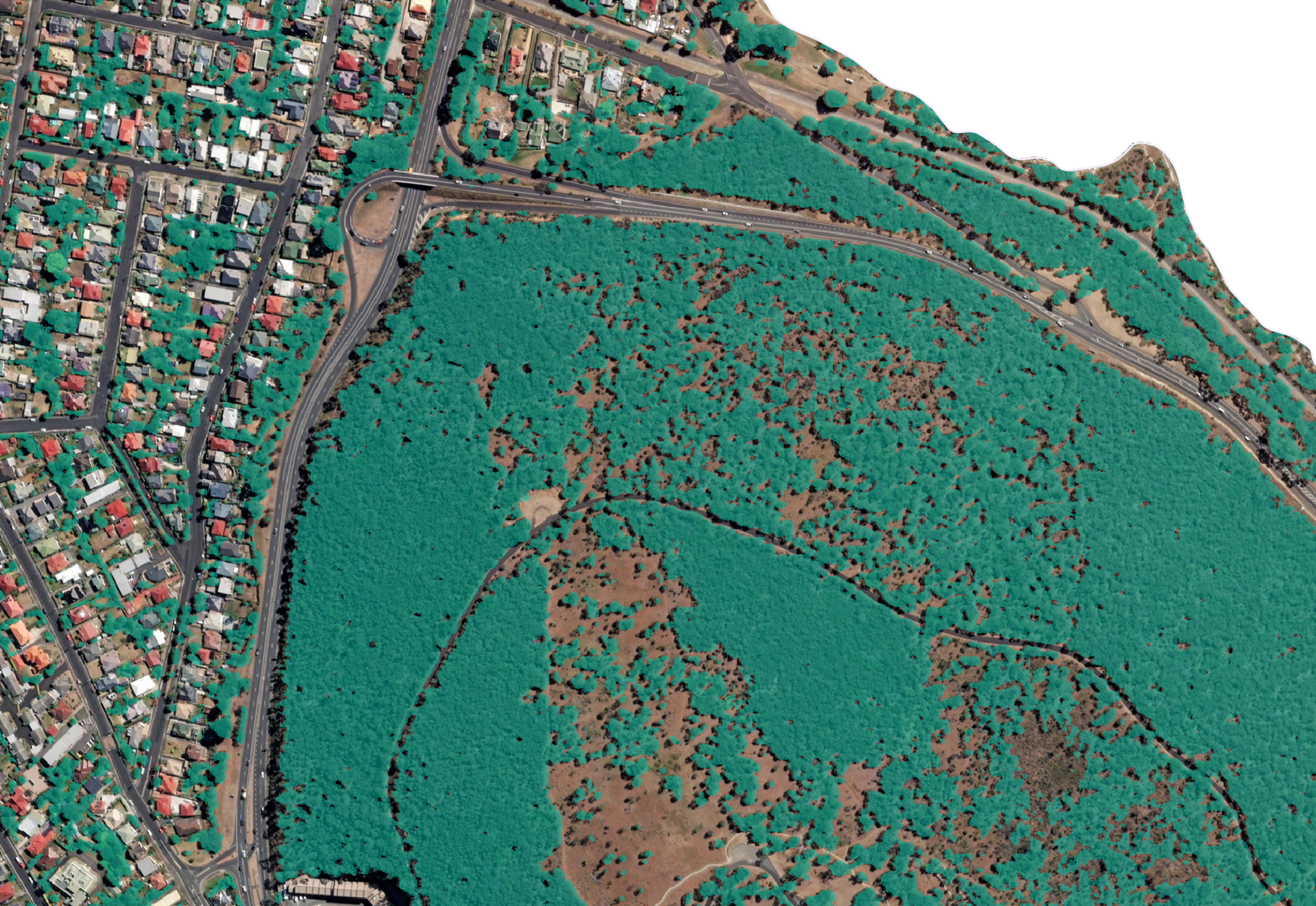
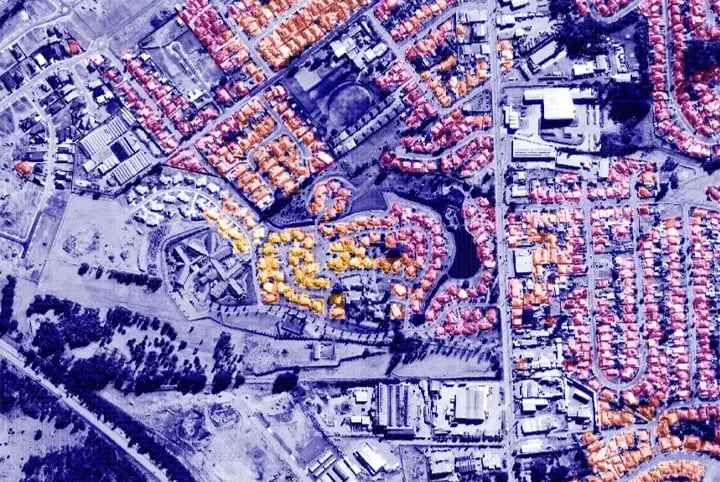
Geoneon collaborated with the City of Launceston and the University of Tasmania to help lay the foundation for the City’s Urban Greening Strategy. Geoneon used high-resolution satellite imagery to map canopy cover, analysed land surface temperature, assessed socio-economic and age-related vulnerability indicators, and developed priority-area analysis. The University of Tasmania contributed research and community engagement.
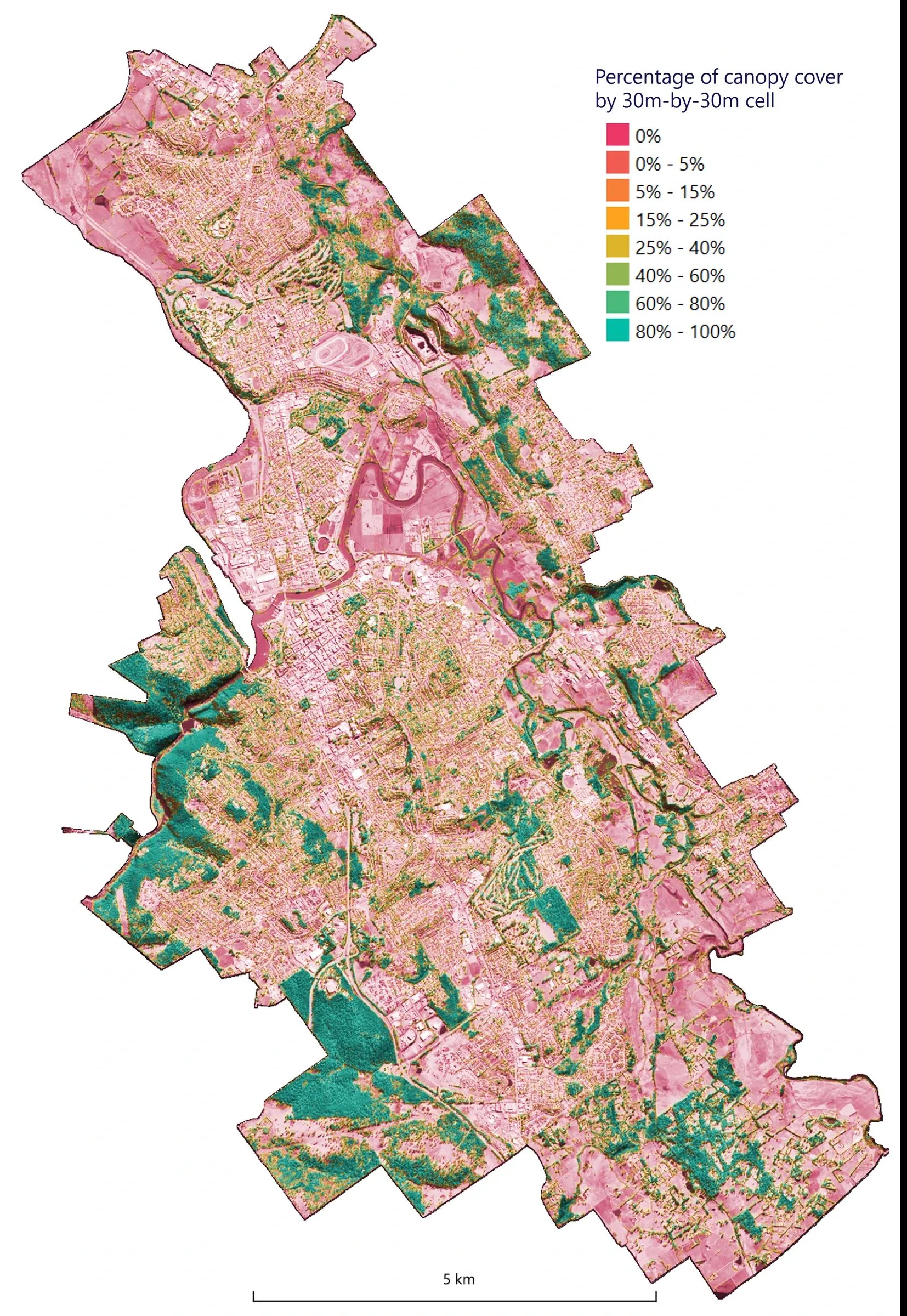
The analysis covered an 85.2 km² urban and peri-urban project area and established a detailed 2021 canopy baseline across the municipality. It also identified where lower canopy cover coincided with higher land surface temperatures and greater population vulnerability.
This gave the City an evidence base for moving from individual tree management towards a broader urban forest approach and for identifying where targeted greening action warranted closer attention.
The Results
The work helped lay the foundation for the City of Launceston’s Urban Greening Strategy, supported by spatial analysis of canopy cover, heat and population vulnerability.
Key outcomes included:
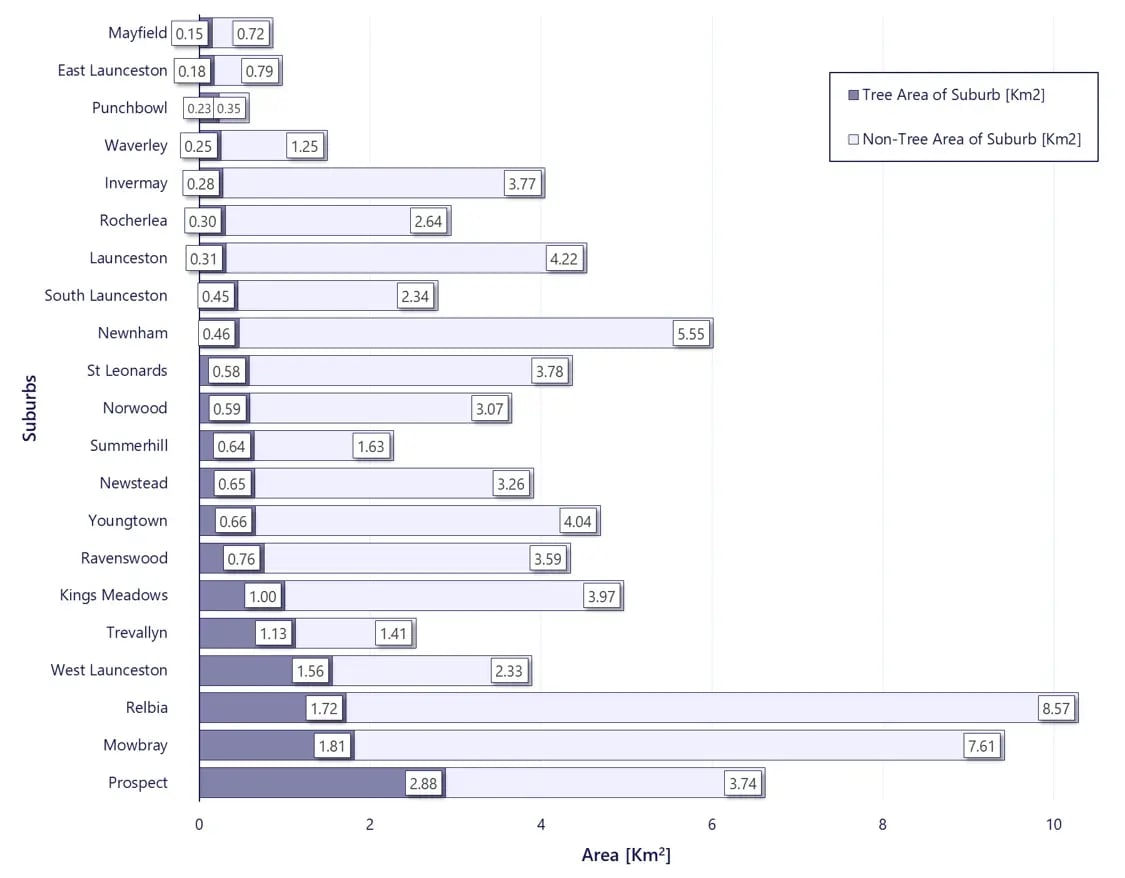
- a measured 2021 canopy baseline of approximately 19.5% across Launceston;
- visibility into significant variation in canopy cover between suburbs;
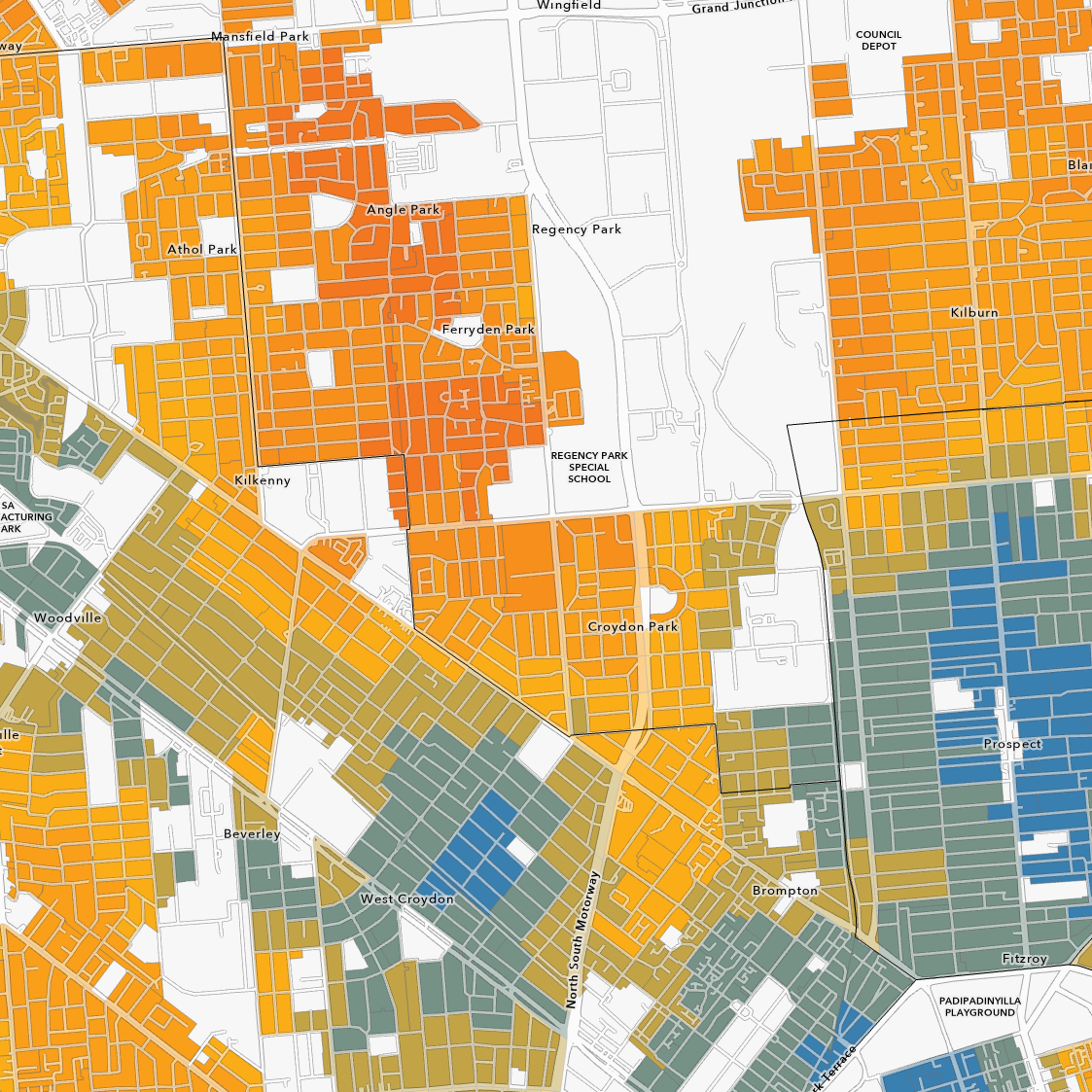
- analysis of where lower canopy cover coincided with higher land surface temperatures;
- analysis of socio-economic and age-related vulnerability; and
- identification of priority areas for urban greening action.
The City’s Urban Greening Strategy marked a shift from managing trees individually to taking a more holistic urban forest perspective and established a city target to increase canopy cover to 40% by 2040.
Geoneon’s analysis identified priority areas where lower canopy cover, higher land surface temperatures and greater population vulnerability overlapped, providing a basis for targeted greening action.
As such, this work gave Launceston a clearer basis for deciding where urban greening could deliver the greatest climate and community benefit.
The work was later recognised with the 2025 Planning Institute of Australia National Award for Planning Excellence in the Planning Research category, awarded to the University of Tasmania, Geoneon, City of Launceston and WSP Australia.
Have a project or question in mind?