

Detect where vegetation has changed or been removed
Use repeat satellite observations and spatial analysis to identify vegetation clearing or significant change across large areas and through time, helping focus review where change is most likely to matter.
Typical uses
Clearing detection · change between reporting periods · corridor or asset monitoring · prioritising areas for field review
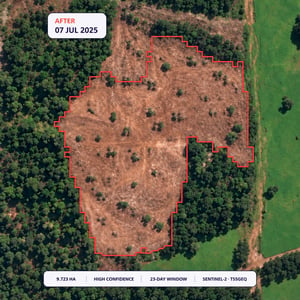
Track how vegetation is recovering through time
Use repeat satellite observations and spatial analysis to measure vegetation recovery after disturbance or rehabilitation, compare progress between areas, and identify locations where recovery is slower or warrants closer review.
Typical uses
Rehabilitation monitoring · recovery trends through time · comparison with reference or analogue vegetation · prioritising areas for field inspection or management
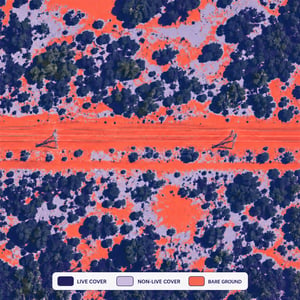
Understand vegetation condition and structure across the landscape
Use satellite imagery and spatial analysis to assess vegetation characteristics such as cover, canopy and height, helping identify spatial patterns, compare areas and track how condition changes through time.
Typical uses
Vegetation cover · canopy assessment · vegetation height and structure · condition indicators · spatial comparison
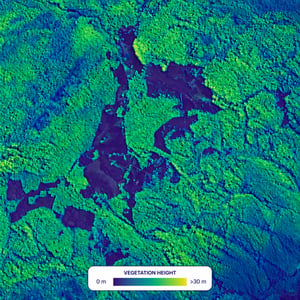
Vegetation analysis across different landscapes
Public examples show how repeatable vegetation evidence can support regional monitoring and city-scale urban greening decisions.
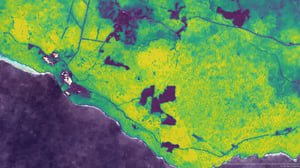
Delivered with the Pacific Community (SPC) DGE team and D4DInsights, quarterly 10 m vegetation-height mapping supports monitoring of structure, clearing, degradation and regrowth across Pacific Island countries.
Read case study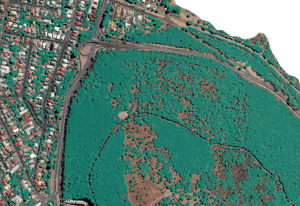
High-resolution canopy mapping compared 2017 and 2022 across Hobart, helping the City identify areas of canopy growth and decline and support more targeted urban greening decisions.
Read case study